

Muralla Arabe
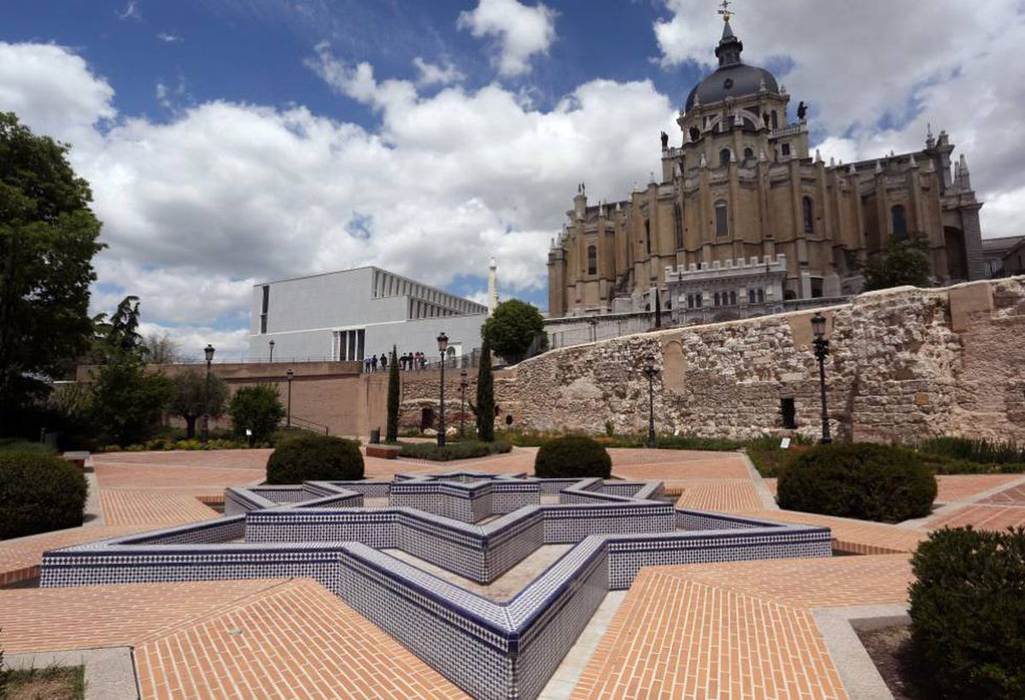
The “Muralla Árabe,” or Arab Wall, refers to the remains of the medieval defensive wall that once surrounded the city during the period of Muslim rule in the Iberian Peninsula.
The Arab Wall dates back to the 9th century when Madrid was under Moorish (Muslim) rule. It served as part of the city’s fortifications, helping to defend it from potential attacks.
While significant portions of the wall have been lost over time, efforts have been made to preserve and protect the remaining sections. Some sections of the Arab Wall can still be seen today, providing a glimpse into Madrid’s medieval past and its multicultural heritage.
Catedral de la Almudena
The Almudena Cathedral of Madrid is a majestic and iconic landmark in the heart of the city. ts prominent location makes it a focal point of the skyline and a must-visit destination for tourists and locals alike. It is a striking example of eclectic architectural styles, blending elements of neoclassical, gothic, and neogothic design. The Almudena Cathedral is not only a place of worship but also a symbol of Madrid’s rich cultural heritage and architectural splendor.
Plaza de la Villa
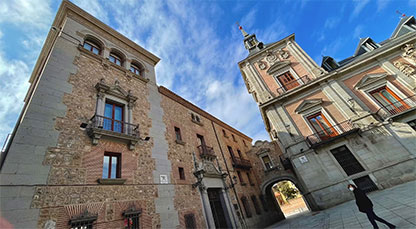
Plaza de la Villa is a historic square located in the city center and it is surrounded by narrow cobblestone streets and historic buildings, creating a charming and atmospheric setting.
The square is renowned for its architectural treasures, including several well-preserved medieval buildings. The most notable landmark is the Casa de la Villa, the former city hall of Madrid. This elegant building features a striking façade with ornate details and a prominent bell tower.
Plaza de la Villa offers visitors the opportunity to admire its architectural beauty and soak in the tranquil atmosphere. The square is an ideal spot for leisurely strolls, photography, and exploring Madrid’s rich history and heritage.
Puerta del Sol
Located in the heart of Madrid, the Puerta del Sol serves as a central hub for transportation, commerce, and tourism. It is home to several notable landmarks and monuments, including the iconic Tío Pepe sign, the statue of El Oso y El Madroño, and the equestrian statue of King Carlos III. The Puerta del Sol is much more than just a square, it is a symbol of Madrid’s energy, diversity, and vitality. Whether you’re shopping for souvenirs, enjoying a meal at a sidewalk cafe, or simply people-watching, the Puerta del Sol offers a quintessential Madrid experience that is not to be missed.
Colegiata de San Isidro
The Colegiata de San Isidro is a historic church dedicated to San Isidro el Labrador, the patron saint of Madrid. It features a mix of architectural styles, including Baroque, Rococo, and Neoclassical elements. The Colegiata de San Isidro is not only a place of worship but also a symbol of Madrid’s rich religious and cultural heritage. Its stunning architecture, religious art, and historical significance make it a must-visit destination for anyone exploring the city’s historic center.
Casa de Cervantes
Situated in the Barrio de las Letras, or Literary Quarter, this museum pays homage to Miguel de Cervantes Saavedra, one of Spain’s most celebrated writers and the author of the timeless masterpiece “Don Quijote.”
The Casa de Cervantes is not the birthplace of Cervantes, but rather a recreation of the type of house where he might have lived during his time in Madrid. Visitors can explore the museum’s rooms, which are furnished in a style reminiscent of the 17th century, gaining insight into the daily life and surroundings of the esteemed author.
In addition to its permanent exhibits, the Casa de Cervantes hosts temporary exhibitions, lectures, and cultural events, further enriching the visitor experience.
Casa-Museo de Lope de Vega
Situated in the Barrio de las Letras, or Literary Quarter, this museum pays tribute to the renowned Spanish playwright and poet Félix Lope de Vega.
Lope de Vega, a prominent figure of the Spanish Golden Age, lived in this house during the latter years of his life. Today, the Casa-Museo de Lope de Vega serves as a cultural institution dedicated to preserving his memory and celebrating his literary contributions.
Visitors to the museum can explore the restored rooms, which are furnished in a style reminiscent of the 17th century, offering a glimpse into the daily life and surroundings of Lope de Vega.
Casa de Quevedo
The Casa de Quevedo, or House of Quevedo, is a historical building located within the Barrio de las Letras.
Quevedo, a prominent figure of the Spanish Golden Age, lived in this house during his lifetime. Today, the Casa de Quevedo serves as a museum and cultural center dedicated to preserving his memory and celebrating his literary contributions.
Visitors to the Casa de Quevedo can explore the restored rooms, which are furnished in a style reminiscent of the 17th century, offering insight into the daily life and surroundings of Quevedo.
Convento de las Trinitarias Descalzas de San Ildefonso
Situated in the Barrio de las Letras this convent holds significant historical and cultural importance.
Founded in the 17th century, the Convento de las Trinitarias Descalzas de San Ildefonso was established by the Trinitarian Order of the Blessed Trinity for the Redemption of Captives. Its primary purpose was to provide a sanctuary for women who had been captured and enslaved by Barbary pirates and to facilitate their redemption.
Today, the Convento de las Trinitarias Descalzas de San Ildefonso continues to serve as a convent for the Trinitarian Sisters, who dedicate their lives to prayer, contemplation, and charitable works.
Plaza de Santa Ana
Situated in the Barrio de las Letras, or Literary Quarter, this bustling plaza is named after the nearby Church of Santa Ana and is surrounded by cafes, restaurants, and theaters.
With its lively atmosphere and charming surroundings, the Plaza de Santa Ana is a popular gathering spot for both locals and tourists. Visitors can enjoy al fresco dining at one of the many outdoor terraces, sip on a refreshing beverage, and soak in the bustling energy of the square.
The plaza is also known for its vibrant cultural scene, with several theaters and performance venues located nearby.
Fuente de Neptuno
Situated in the bustling Plaza de Cánovas del Castillo, commonly known as Plaza de Neptuno, the fountain is a striking symbol of the city’s grandeur and cultural heritage.
Designed by sculptor Juan Pascual de Mena in the 18th century, the Fuente de Neptuno depicts the Roman god Neptune, god of the sea, standing atop a chariot drawn by sea horses. The sculpture is crafted in marble and bronze, exuding power and majesty.
Surrounded by elegant buildings and bustling streets, the fountain serves as a focal point of the plaza, attracting locals and visitors alike. It is a popular gathering spot and a favored location for celebrations, protests, and cultural events.
Fuente de Cibeles
It is situated at the intersection of Calle Alcalá and Paseo de Recoletos, the fountain occupies a central position in the city’s bustling urban landscape.
Designed by architect Ventura Rodríguez in the late 18th century, the Fuente de Cibeles features a majestic depiction of the Greek goddess Cybele, the Phrygian goddess of fertility and nature, seated atop a chariot drawn by lions. The goddess is surrounded by allegorical figures representing rivers, symbolizing the abundance and fertility associated with water.
It is a popular gathering spot for locals and tourists alike, offering a picturesque backdrop for celebrations, gatherings, and civic events.
Daoiz y Velarde
Daoiz y Velarde are two Spanish military heroes from the early 19th century, celebrated for their role in resisting Napoleon’s invasion of Spain. They are revered as national heroes in Spain, remembered for their courage, sacrifice, and unwavering commitment to the cause of Spanish independence. Their legacy continues to inspire generations of Spaniards and serves as a reminder of the importance of standing up for freedom and justice.