




Plaza de Zocodover
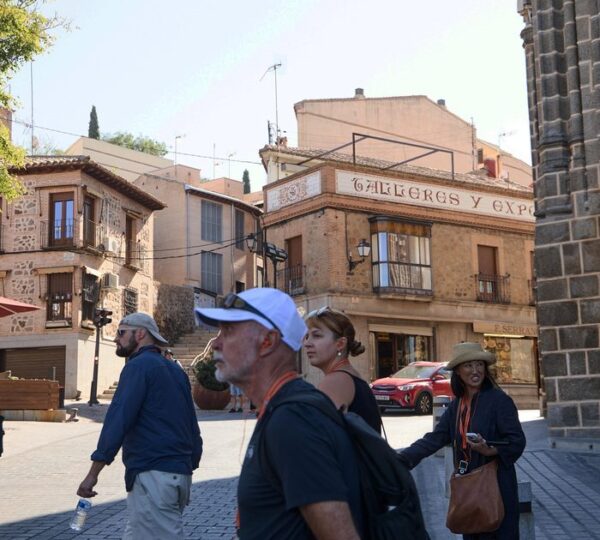
The Plaza de Zocodover is a square of the city of Toledo, in the autonomous community of Castilla la Mancha. It was the nerve center of the city during most of its history, acting as its main square. A part of it was designed by Juan de Herrera in times of the reign of Felipe II. Here horses, donkeys, foals, mares, mules and other beasts were sold, when the city of Toledo was Spanish-Muslim city. Here was organized the most important market of the city. It has been celebrating for centuries, it is a weekly market. Today it celebrate on Tuesday in the vicinity of Paseo de Merchán or de la Vega.
Church of Santo Tomé
The parish church must have been founded after the Christian reconquest of the city by Alfonso VI in 1085, as the earliest record of its existence dates from 1142. Of the early Mudejar construction, it retains the large multilaminar arch superimposed on the main arch separating the nave from the chancel along with the strong buttresses of this part of the nave and a trefoil arch over a brick frieze arranged in the Mudejar style that survives at the top in what was the semicircular sanctuary of the original one-nave church.
Monastery of San Juan de los Reyes
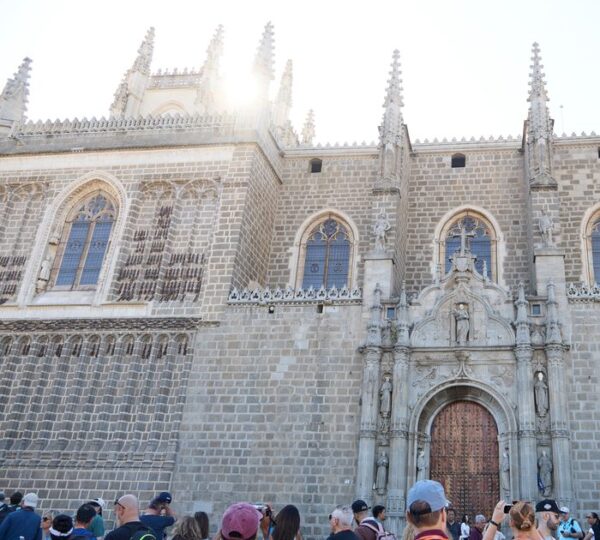
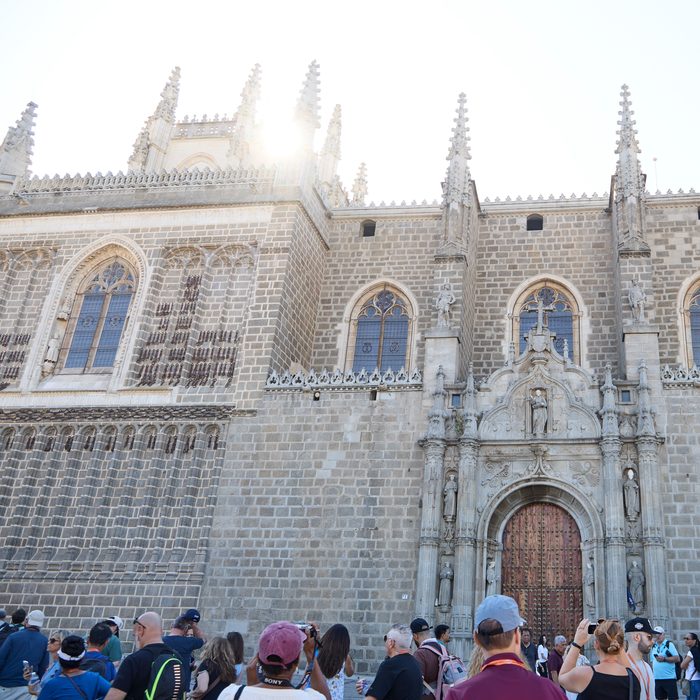
This monastery was founded by King Ferdinand II of Aragon and Queen Isabella I of Castille to commemorate both the birth of their son, Prince John, and their victory at the Battle of Toro (1476) over the army of Alfonso Vi of Portugal. Prince John of Portugal also celebrated his victory over the Castilian army of the Catholic monarchs with a solemn procession on each anniversary of the battle. This apparent contradiction was a consequence of the indecisive military outcome of the battle: the troops under Afonso V broke while the forces led by Prince John of Portugal defeated the Castilian right wing and remained in possession of the battlefield.
Mosque of Cristo de la Luz
Built in 999, the Old Mosque, current Hermitage of Cristo de la Luz, is the oldest standing monument in the city of Toledo.
Small but very rich in history and art. Its similarities and differences with the great mosque of Córdoba make it a tourist attraction that you should not miss if you come to see Toledo and want to soak up its multicultural history.
The Islamic Toledo, very unknown to many, enjoys a relevant significance in this singular building. The Toledo of the three cultures made a building: the achievement of civilizations that starred in much of the history of our city becomes a reality in this mosque converted into a church.
The legend of Cristo de La Luz, one of the best known, leaves no one indifferent …
…. don’t you know it? Come discover it!
Synagogue of Santa María la Blanca
The synagogue is a Mudejar construction, created by Moorish architects for non-Islamic purposes. But it can also be considered one of the finest example of Almohad architecture because of its construction elements and style. The plain white interior walls as well as the use of brick and of pillars instead of columns are characteristics of Almohad architecture. There are also nuances in its architectural classification, because although it was constructed as a synagogue, its hypostyle room and the lack of a women’s gallery make it closer in character to a mosque. Though it does not have a women’s gallery today, an early twentieth century architect suggested that it did at one time have a one.
The synagogue was turned into a church in 1405 or 1411, but without any major renovations. It took at that time the name of Santa María la Blanca (Saint Mary the White) and today it is most commonly known by this name